BUILDING MORE INCLUSIVE CLASSROOMS STARTS HERE.
The Neuro-Inclusive Classroom | NEW Training for Schools 2026/27
Practical, evidence-informed training that helps educators understand what’s behind behaviour, respond with confidence and create calmer, more inclusive classrooms.
Introducing the Neuroinclusive Classroom for 2026/27
Our Neuroinclusive Classroom programme has been newly developed for educators who want practical, evidence-informed approaches to inclusion, executive function and participation.
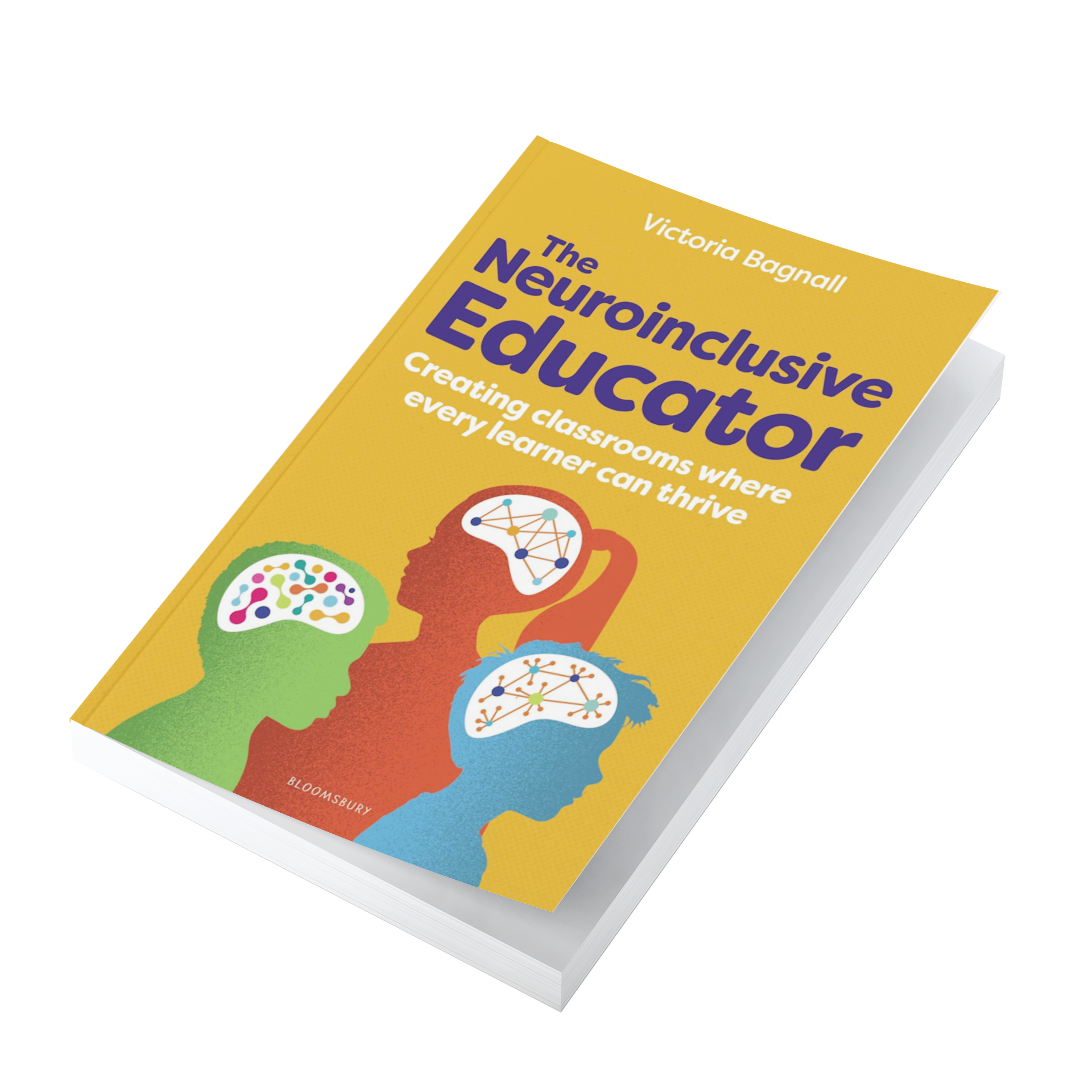
Written and delivered by Victoria Bagnall, one of the UK’s leading Executive Function specialists and author of the forthcoming book The Neuroinclusive Educator (Bloomsbury, 2026), this training helps staff move from understanding to implementation.
You’ll gain:
Practical strategies you can use immediately
Live training with classroom application
Train up to six staff at Level 1 for £900 inc vat  (£150 inc vat per person)Â
Level 1 professional pathway
Sound familiar?
Are you noticing:
- ✔ Capable pupils struggling to start or follow through?
- ✔ Behaviour that feels difficult to interpret?
- ✔ Increasing complexity across classrooms?
- ✔ Inconsistent approaches across teams?
- ✔ Staff feeling under-equipped around regulation or executive function?
You’re not alone.
Many schools tell us they understand what they want to achieve but are looking for practical ways to make it happen.
What Will You Learn?
Neuroinclusive practice shifts the focus from reacting to behaviour towards understanding the role of regulation, development and executive function in everyday learning.
Across both programmes, educators will learn how to:
- ✔ Support attention, memory and emotional regulation
- ✔ Reduce classroom friction and escalation
- ✔ Improve engagement and participation
- ✔ Build consistency across staff teams
- ✔ Respond to behaviour with greater clarity and confidence
Choose Your Pathway
Neuroinclusive Classroom Practice
For teachers and practitioners supporting ages 7–18
Best for:
- ✓ Classroom learning
- ✓ Behaviour and regulation
- ✓ Independence
- ✓ Transitions
- ✓ Participation
Neuroinclusive Early Years Practice
For practitioners supporting ages 2–6
Best for:
- ✓ Play-based learning
- ✓ Co-regulation
- ✓ Communication
- ✓ Emotional development
- ✓ Early foundations
- Neuroinclusive Classroom Practice
- Neuroinclusive Early Years Practice
| Course Features | Neuroinclusive Classroom Practice | Neuroinclusive Early Years Practice |
| Course Features | From £150 / up to 6 delegates | From £150 / up to 6 delegates |
| Hybrid course: self study & live sessions | ||
| Level 1 of 4 | ||
| Neurodiversity & neuroinclusion | ||
| Executive function & basic neuroscience | ||
| Building Connection | ||
| Interoception and Self Regulation | ||
| Motivation and Collaboration | ||
| Embedding tailored strategies | ||
| Large Groups and Classes | ||
| Executive function characters | ||
| Executive function development in the early years | ||
| Practical week | ||
| Extra workplace module | ||
| Copy of The Neuroinclusive Educator | ||
| Group discounts | Enquire | Enquire |
Find the course right for you
Small groups. Practical strategies. A calm, supportive space.
You can switch between options.
Join us this Autumn and start building more neuroinclusive classrooms
Neuroinclusive Classroom Practice
For teachers (7–18 years)
Mondays • 5–7pm UK
- 5 October - Foundations: Introduction to Executive Function and Naming Barriers to Learning
- 2 November - Tuning In and Settling (Interoception & Co-regulation)
- 16 November - Strategising and Reinforcing (Mental Contrasting & Habit Formation)
Neuroinclusive Early Years Practice
For educators (2–6 years)
Wednesdays • 5–7pm UK
- 7 October - Foundations: Introduction to Executive Function and Naming Barriers to Learning
- 4 November - Tuning In and Settling (Interoception & Co-regulation)
- 18 November - Strategising and Reinforcing (Mental Contrasting & Habit Formation)
Spring 2027: Create classrooms where more children can thrive
Neuroinclusive Classroom Practice
For teachers (7–18 years)
Wednesdays • 5–7pm UK
- 3 February - Foundations: Introduction to Executive Function and Naming Barriers to Learning
- 24 February - Tuning In and Settling (Interoception & Co-regulation)
- 10 March - Strategising and Reinforcing (Mental Contrasting & Habit Formation)
Neuroinclusive Early Years Practice
For educators (2–6 years)
Mondays • 5–7pm UK
- 1 February - Foundations: Introduction to Executive Function and Naming Barriers to Learning
- 22 February - Tuning In and Settling (Interoception & Co-regulation)
- 8 March - Strategising and Reinforcing (Mental Contrasting & Habit Formation)
Autumn 2026
Neuroinclusive Classroom Practice
For teachers (7–18 years)
Mondays • 5–7pm UK
- 5 October - Foundations: Introduction to Executive Function and Naming Barriers to Learning
- 2 November - Tuning In and Settling (Interoception & Co-regulation)
- 16 November - Strategising and Reinforcing (Mental Contrasting & Habit Formation)
Neuroinclusive Early Years Practice
For educators (2–6 years)
Wednesdays • 5–7pm UK
- 7 October - Foundations: Introduction to Executive Function and Naming Barriers to Learning
- 4 November - Tuning In and Settling (Interoception & Co-regulation)
- 18 November - Strategising and Reinforcing (Mental Contrasting & Habit Formation)
Spring 2027
Neuroinclusive Classroom Practice
For teachers (7–18 years)
Wednesdays • 5–7pm UK
- 3 February - Foundations: Introduction to Executive Function and Naming Barriers to Learning/li>
- 24 February> - Tuning In and Settling (Interoception & Co-regulation)
- 10 March - Strategising and Reinforcing (Mental Contrasting & Habit Formation)
Neuroinclusive Early Years Practice
For educators (2–6 years)
Mondays • 5–7pm UK
- 1 February - Foundations: Introduction to Executive Function and Naming Barriers to Learning
- 22 February - Tuning In and Settling (Interoception & Co-regulation)
- 8 March - Strategising and Reinforcing (Mental Contrasting & Habit Formation)
📚 Signed Book Included
Every participant receives a signed copy of Victoria Bagnall’s new book, The Neuroinclusive Educator, as part of the training.
✨ The book provides the practical framework behind the programme, helping staff revisit key ideas, build a shared language and continue embedding neuroinclusive practice long after the training sessions have finished.
💡 Designed to support ongoing learning and reflection, it serves as a valuable resource that educators can return to whenever they need guidance, inspiration or practical strategies for creating more neuroinclusive classrooms.
Learn with Victoria Bagnall

Co-Founder of Connections in Mind, Executive Function specialist, educator and author of The Neuroinclusive Educator.
Victoria has spent over a decade helping schools translate executive function research into practical approaches that strengthen inclusion, improve understanding of behaviour and support better outcomes for children and young people.
✔ Practical strategies
✔ Real classroom application
✔ Built from experience, not theory alone