Making the Most of the Summer Break: Building Capacity, Your Way
The summer holidays are often described as a break from learning.
But for many children and young people, the summer can be so much more than that. It can be a chance to recover, reset, reconnect and gently build the capacity they need for the year ahead.
When we think about learning, we often jump straight to academics: reading, writing, revision, practice papers or “getting ahead”. But learning does not only happen through formal tasks. In fact, some of the most important foundations for learning are built through everyday life: planning a trip, managing time, following an interest, resting deeply, spending time with people who help us feel safe, and learning what helps our own brain work well.
That is why this month’s resources focus on making the most of the summer holidays — not by filling them with pressure, but by helping children, young people and families think about summer as a time for capacity building.
Why rest matters for the brain
We all know what it feels like to be running on empty.
When life has been stressful for a long time, it becomes harder to focus, organise ourselves, manage emotions, think flexibly and get started on things. These are all connected to executive function — the brain functions that help us manage ourselves in order to meet a goal.
Our NeuroInsight video, Why Vacations Are Good for Your Brain, explains this in an accessible way. It explores how holidays can help reduce stress, support mood, create opportunities for movement and connection, and offer novel experiences that may support cognitive flexibility and creativity.
This matters because executive function skills do not develop well under constant pressure. They need the right conditions: safety, rest, connection, meaningful challenge and opportunities to practise in real life.
Summer is not about doing more
For many families, summer can come with a strange kind of pressure.
There may be worries about children “falling behind”, losing routines, spending too much time on screens, or struggling to return to school in September. These concerns are understandable, especially when a child finds transitions, independence or self-regulation difficult.
But the answer is not always to do more.
Sometimes the most powerful thing we can do is ask a different question.
Instead of:
“How can we make this summer productive?”
We can ask:
“What experiences will help build capacity?”
Capacity is not built through endless tasks. It grows through carefully chosen experiences that stretch a young person just enough, while still giving them the support, recovery and autonomy they need.
Real-life executive function practice
One of the best things about the summer holidays is that they create opportunities for real-life practice of our executive function skills.
A child might plan an independent trip to a local shop, café or place of interest. They might need to think about the route, timing, money, what to take, what could go wrong and how to ask for help if needed.
Another child might choose a project based on something they are genuinely interested in. They might make an explainer video for social media, design something, build something, research a topic, write a guide, create a playlist, organise an event or learn a new skill.
These activities may look informal, but they are rich in executive function practice.
They can involve:
- task initiation
- planning and prioritising
- organisation
- time management
- working memory
- response inhibition
- cognitive flexibility
- emotional regulation
- sustained attention
- goal-directed persistence
- metacognition
The difference is that the skills are being practised in a meaningful context, not as an abstract exercise
Executive Function Boosting Resources for Student Parents and Teachers.
To support this ½ term’s theme, we have created a set of simple, practical resources that can be used by older students, parents and educators.
The two-page information sheet introduces the idea of using the summer holidays to build capacity. It explains why rest, connection, fun, calm and gentle challenge all matter, and gives examples of real-life activities that can support executive function skills without adding unnecessary pressure.
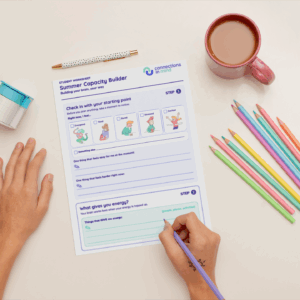
The Summer Capacity Builder worksheet helps students reflect on their own energy, choose one or two “just-right” challenges, and use mental contrasting to make a realistic plan. Instead of simply setting a goal, students are guided to think:
When I’ve done this, how will I feel?
What might get in my way?
Given that, what is my plan?
This is a powerful shift. It helps students move beyond good intentions and begin to understand what actually supports follow-through.
We have also created a simple poster with the message:
Give your brain space to grow this summer.
Rest. Try. Learn what works for you.
This can be displayed in schools, shared with families or used as a visual reminder that summer does not need to be about perfection or productivity.
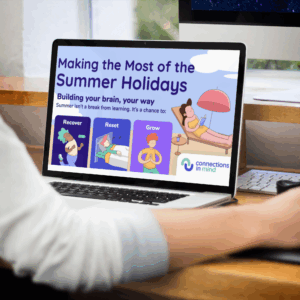
Finally, short presentation can be used with students or parents to introduce the theme quickly and clearly. It reframes summer as a chance to recover, reset and grow, while giving families a shared language for capacity, energy and executive function development.
Learning how your unique brain works
Perhaps the most important message in this month’s resources is this:
Summer is not about wasting away days in the sunshine.
It is the perfect opportunity to learn more about how your unique brain works.
For some young people, capacity grows through quiet routines and predictable days. For others, it grows through novelty, movement, social connection or creative projects. Some need more recovery before they can stretch themselves. Others need support to choose challenges that are meaningful but not overwhelming.
There is no single “right” way to do summer.
The aim is to help young people notice:
What gives me energy?
What drains me?
What helps me start?
What helps me keep going?
What kind of support works for me?
What helps me recover when things feel hard?
These are not small questions. They are the foundations of lifelong self-understanding.
A final thought for families
It’s important for educators that we work to soothe parental anxiety over summer expectations. To reassure them:
If your summer does not look perfect, you have not failed.
If routines wobble, plans change, motivation dips or some days become rest days, that is part of being human.
The goal is not to create a perfectly structured summer. The goal is to offer young people opportunities to rest, connect, try, reflect and learn more about themselves.
Because when children and young people understand their own brains, they are better able to advocate for what they need, use strategies that work for them, and build skills in ways that feel possible.
This summer, let’s give young people space to grow.
Not through pressure.
Through rest, gentle challenge, connection, fun and calm.
Give your brain space to grow this summer.
Rest. Try. Learn what works for you.
Related Resources
-
Coaches and Therapists - Resources
Making the Most of the Summer Holidays Presentation
£16.00 Add to basket