
Executive Function Is Moving Centre Stage in Education
What the SEND reform conversation could mean for schools
Executive function is becoming increasingly important in how schools understand learning, behaviour and inclusion. As the SEND reform consultation evolves, many educators are recognising something they have seen for years: some pupils do not struggle because they lack ability, but because the skills needed to organise thinking, behaviour and action are still developing.
Join one of our Free Webinars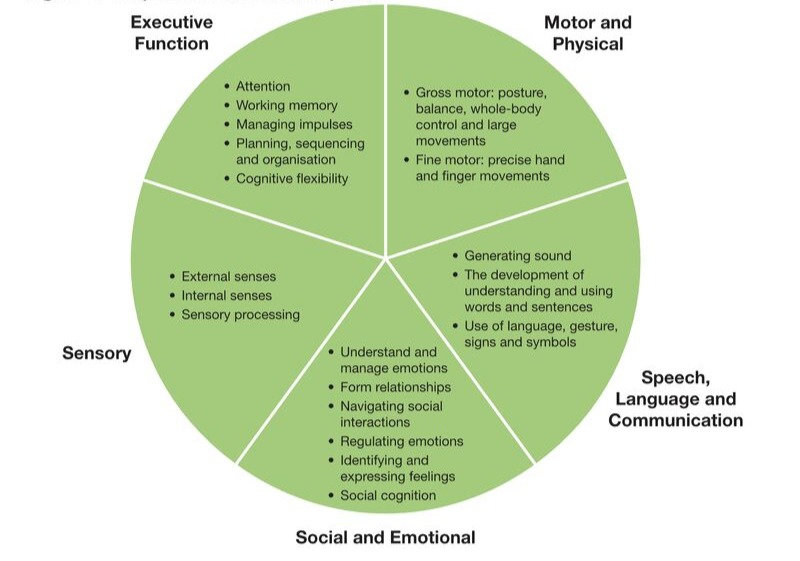
Why does this matter?
Across UK education, the conversation around executive function is growing fast.
In the UK government’s SEND reform consultation, Putting Children and Young People First, executive function has been proposed as a distinct developmental domain within the new Areas of Development framework.
While the consultation is still ongoing, the direction of travel is clear: many learning challenges are not simply about knowledge or ability. They are about how the brain organises thinking, behaviour and action.
For schools, this matters because teachers are already seeing these patterns every day.
Does this sound familiar?
You may recognise pupils who:
- understand the lesson but cannot start the work
- forget instructions moments after hearing them
- lose books, worksheets or equipment regularly
- become overwhelmed by multi-step tasks
- rush work or make impulsive mistakes
- struggle to finish despite strong ability
These patterns are often interpreted as behaviour or motivation issues.
In many cases, they may reflect developing executive function skills.
What is an executive function?
Executive function is the set of mental processes that help pupils to plan, organise, manage attention, regulate impulses and adapt their thinking.
At its core, executive function is built on three key brain processes:
- Working memory – holding and using information in mind
- Impulse control – pausing before acting and resisting distractions
- Cognitive flexibility – adapting when situations change
When these processes are under strain, pupils can appear stuck, disorganised, overwhelmed or disengaged, even when they understand the work.
Why this matters for schools
A developmental lens, not a behaviour label
One of the most important shifts in the SEND reform conversation is that executive function is being framed as developmental.
That matters because it challenges the assumption that pupils already have the skills needed to meet every classroom expectation.
Instead of asking:
Why won’t they do it?
Schools can begin asking:
What skill might still be developing here?
That shift can transform how teachers respond to behaviour, learning challenges and inclusion.
Free Download: Understanding Executive Function
A practical guide for schools
Download our free short guide to explore:
- what executive function is
- how it shows up in classrooms
- why it matters for SEND and inclusion
- practical ways schools can respond